



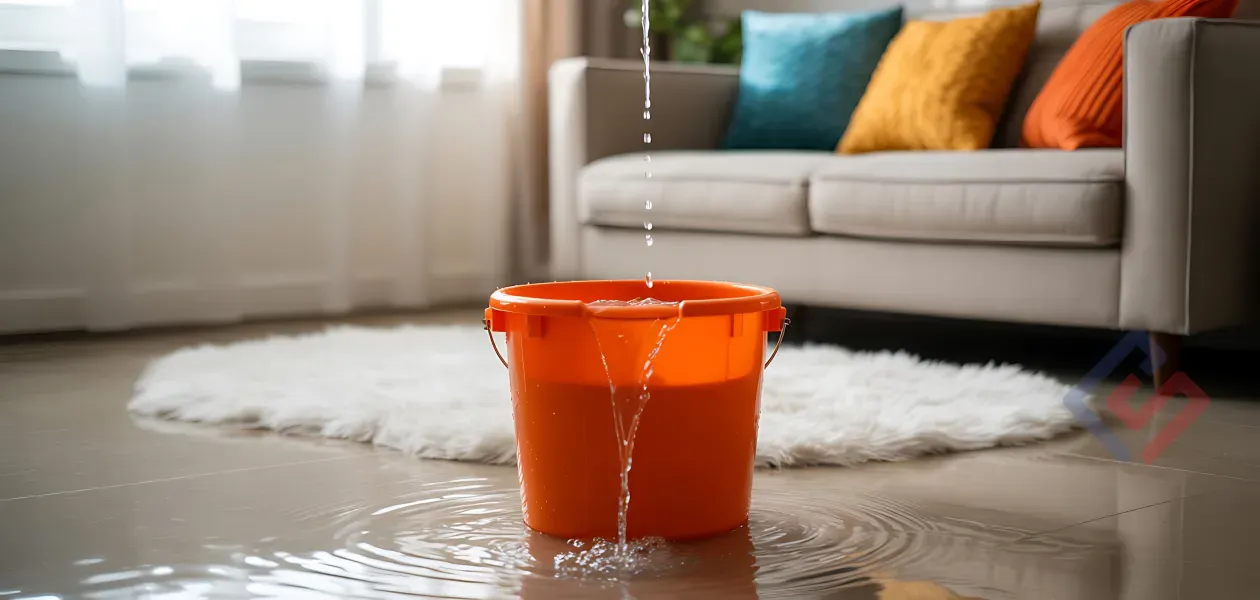
If a leak from your apartment damages your neighbours’ property, standard home insurance does not always compensate them for the loss. For this, the policy must include civil liability towards third parties. This type of coverage may compensate for repair costs, damaged furniture, appliances and other property belonging to your neighbours, within the limit established by the insurance contract. In the event of a claim, it is important to stop the source of the water first, document the damage and notify the insurer as soon as possible.
A burst pipe, a malfunctioning washing machine, a damaged flexible hose or a tap left running can lead to a situation where repairs are needed not only in your apartment. Water can leak to the floor below and damage your neighbours’ ceiling, walls, furniture, flooring or household appliances.
This is where the difference between insurance for your own apartment and civil liability insurance towards neighbours becomes especially important. The first type of coverage protects your own property. The second may compensate for damage caused to other people when you are responsible for the incident.
On the Superpolis.md property insurance page, civil liability towards third parties is listed as an additional type of coverage: if the owner accidentally floods the neighbours or causes other damage, the insurance company may compensate the loss within the insured amount specified in the contract.
Short answer: who pays if you flood your neighbours?
If the leak occurred due to circumstances for which you are responsible, there are two main possibilities.
If the insurance policy includes civil liability towards third parties, the insurance company may compensate your neighbours for the damage, within the limits and conditions of the contract.
If this coverage is not included, simply having insurance for your own apartment does not mean that the insurer will pay for your neighbours’ repairs. The issue of compensation will have to be resolved separately, and the costs may fall on the party responsible for the incident.
The cause of the flooding also matters. It is necessary to establish where the water came from and who is responsible: the apartment owner, the building maintenance company, the neighbour upstairs or another party.
How home insurance differs from civil liability insurance
These are two different types of protection that may be included in the same policy.
Insurance for your own apartment
This coverage protects your own property directly.
Depending on the contract, you may insure:
- structural elements of the apartment;
- interior finishes;
- furniture;
- household appliances;
- other property inside the home.
For example, if your upstairs neighbours flood your apartment and the water damages the ceiling, walls and furniture, compensation may be paid under your property insurance policy if water damage is included in the coverage.
Civil liability towards third parties
This type of insurance protects your financial liability towards other people.
For example, the hose of your washing machine bursts. Water damages the ceiling and laminate flooring in the apartment below. If your policy includes civil liability and the incident meets the policy conditions, the insurance company may compensate your neighbours for the damage instead of you having to pay the entire repair cost yourself.
What damage to your neighbours may be covered by insurance?
The exact list is always determined by the insurance contract. However, civil liability insurance generally concerns direct property damage caused by an event covered under the policy.
For example, flooding may damage:
- ceilings and walls;
- wallpaper and decorative finishes;
- flooring;
- furniture;
- household appliances;
- lighting fixtures;
- other property belonging to the neighbours.
The amount of compensation depends not on the value of your apartment, but on the actual confirmed damage and the liability limit stated in the policy.
For civil liability towards third parties, some insurance offers may provide a limit of up to MDL 100,000. This is not a universal amount for every contract: the specific limit must be checked when taking out the policy.
For example, if the liability limit is MDL 100,000 and the confirmed damage to the neighbours is MDL 35,000, the claim will be assessed based on the actual loss and the policy conditions. If the damage exceeds the limit, the remaining amount may remain the responsibility of the liable party.
What to do immediately after flooding
The first priority is to prevent further damage.
If it is possible and safe:
- shut off the water;
- switch off the electricity in the affected area if there is a risk of water coming into contact with electrical wiring;
- call an emergency or maintenance service if you cannot stop the source yourself;
- warn your neighbours;
- photograph the source of the leak and the resulting damage;
- notify the insurer or broker about the incident.
Do not immediately remove all evidence of the incident before documenting the damage, except where action is necessary to prevent further loss.
It is useful to photograph or record:
- the place where the water came from;
- damaged pipes, hoses or plumbing fixtures;
- the condition of your apartment;
- damage in your neighbours’ apartment;
- general views of the affected rooms;
- damaged furniture, appliances and finishes.
The better the situation is documented, the easier it will be later to establish the circumstances and the amount of damage.
Should you pay your neighbours for repairs immediately?
It is better not to rush into paying money or agreeing to the first amount requested, especially if you have civil liability insurance.
First, notify the insurer and clarify the claim settlement procedure. The insurance company may require an inspection of the damage, an incident report, photographs, a repair estimate or other supporting evidence.
If you compensate the neighbours in full before contacting the insurer, this may complicate the subsequent handling of the claim, especially if the policy requires prior notification and approval.
This does not mean that you should ignore the situation with your neighbours. On the contrary, it is better to exchange contact details immediately, explain that you have an insurance policy and agree on the next steps after contacting the insurance company.
How the insurance company determines the amount of damage
After receiving the notification, the insurer examines the circumstances of the incident and checks whether it qualifies as an insured event under the contract.
The following factors are usually considered:
- the cause of the flooding;
- who is responsible for the incident;
- which items were damaged;
- the cost of restoration;
- the extent of the damage;
- documents and photographs;
- the civil liability limit;
- the deductible, if applicable;
- exclusions under the contract.
Insurance compensation should not make damaged property more valuable than it was before the incident. The purpose of insurance is to compensate for the confirmed loss within the terms of the contract.
Therefore, if older flooring, furniture or appliances are damaged, the insurance company may take into account the nature and actual value of the damage rather than automatically paying for any renovation chosen by the affected party.
What documents may be required?
The exact list depends on the insurer and the circumstances, but in the event of flooding it is usually useful to prepare:
- the insurance policy;
- an identity document;
- documents relating to the apartment, if requested;
- a claim notification or insurance claim form;
- a flooding report or another document confirming the incident;
- photographs and videos;
- a description of the cause of the leak;
- a list of damaged property;
- documents or estimates showing the repair cost;
- receipts and invoices if any expenses have already been approved;
- contact details of the affected neighbours.
If the cause is related to common building utilities or infrastructure, a document from the building management company or another competent party confirming the source of the incident may also be required.
When the insurer may refuse to compensate your neighbours
The existence of an insurance policy does not mean that every type of damage will automatically be covered.
Compensation may be refused or limited if the situation falls under the policy exclusions. For example, the following may matter:
- intentional actions;
- a previously known defect that was left unrepaired for a long period;
- gradual leakage;
- normal wear and tear of pipes or other utilities;
- the absence of civil liability coverage in the policy;
- damage exceeding the established limit;
- other exclusions expressly stated in the contract.
That is why it is important to check not only the list of covered risks when buying insurance, but also the restrictions.
Since June 2026, before a general insurance contract is concluded, consumers in Moldova must be provided with an insurance product information document. It clearly sets out covered and excluded risks, limitations, territorial scope, customer obligations and the main payment conditions.
This is a useful document that should be reviewed together with the insurance contract before purchasing a policy.
What if your neighbours flood you?
This is the opposite situation, and in this case your own property insurance comes into play.
If water leaks from the apartment above and damages your home, your policy may compensate for the damage if water-related risks are included in the coverage.
It is important to:
- prevent further damage;
- document the consequences;
- identify the source of the leak;
- notify the insurer;
- obtain the necessary documents relating to the incident;
- avoid starting major repairs before inspection if this is required under the policy terms.
In other words, one properly selected policy can perform two different functions: protect your apartment if you are the affected party and protect your budget if other people suffer damage due to an incident for which you are responsible.
How to choose a policy that protects you if you flood your neighbours
Before taking out insurance, it is worth asking the insurer or broker several specific questions.
Is water damage in my apartment covered?
Check whether burst pipes, plumbing accidents and flooding caused by neighbours are included.
Is civil liability towards third parties included?
Do not assume that it is automatically part of the policy.
What is the liability limit?
In a serious flooding incident, several apartments may be damaged and the total loss can be significant.
Is there a deductible?
Clarify what portion of the loss the policyholder must pay in certain situations.
What exclusions apply?
It is particularly important to check gradual leaks, wear and tear of utilities and violations of operating or maintenance rules.
What should you do in the event of a claim?
Find out in advance about notification deadlines and which documents you will need to collect.
FAQ
If I flood my neighbours, will standard home insurance pay for their repairs?
Not necessarily. To cover damage to your neighbours, the policy must include civil liability towards third parties.
If the neighbours upstairs flood me, what type of insurance do I need?
You need property insurance that includes water damage. If the relevant coverage is included, the insurer may compensate for damage to your apartment and insured property.
Do I need to admit liability immediately?
It is better to document the circumstances and establish the cause of the incident first. The source may not only be equipment inside your apartment but also common building utilities or another cause.
Will insurance cover the full amount of damage to my neighbours?
Compensation is paid within the terms and civil liability limit stated in the contract. If the damage exceeds the limit, the remaining amount may not be covered by the policy.
Can I insure only my liability towards my neighbours?
This depends on the products offered by the specific insurance company. When selecting a policy, you should check whether liability can be insured separately or whether it is available as additional coverage under property insurance.
What should I do if my neighbour demands payment immediately?
Document the incident and notify your insurer. If you have the relevant coverage, it is better to follow the established damage assessment procedure first and agree on the compensation process.
Is a washing machine leak covered?
It may be covered if the incident falls within the risks and conditions of the specific policy. The cause of the event and the exclusions are important.
What matters more when choosing a policy: the value of the apartment or the liability limit?
These are two different parameters. The insured amount for the apartment determines the protection of your own property, while the civil liability limit determines the maximum amount available for damage caused to third parties.
Protect your home and your liability towards neighbours
Home insurance is useful not only when your own property is damaged. A policy with appropriately selected civil liability coverage can protect your family budget if an accident in your apartment causes damage to your neighbours.
Before purchasing a policy, check which risks are included, whether interior finishes and belongings are insured, whether civil liability towards third parties is provided, what limit applies and which exclusions are in force.
→ Request a quote for apartment or house insurance
→ View all Superpolis.md insurance services
→ Learn how the Superpolis.md insurance broker works